What it is
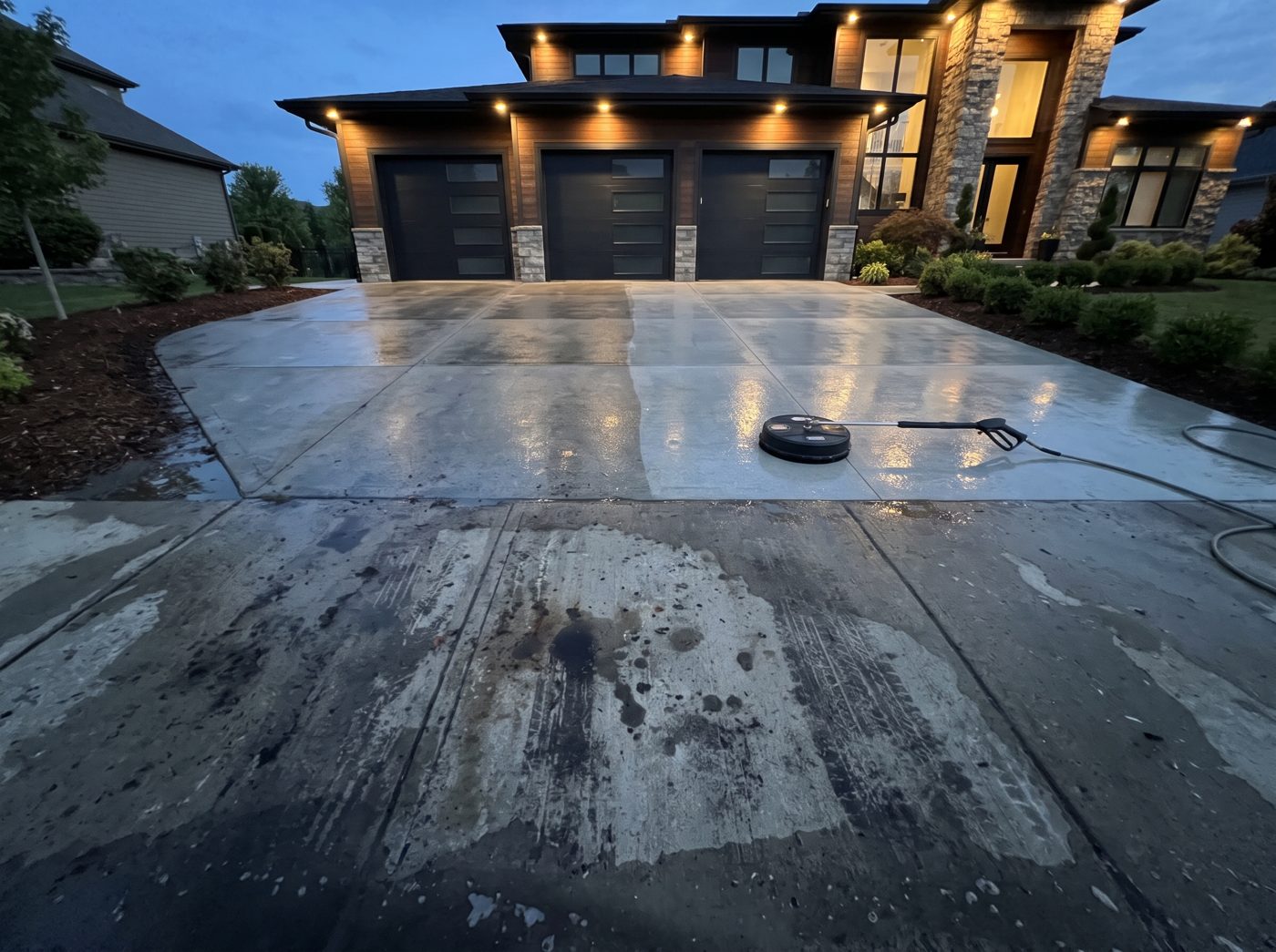
Driveway cleaning is the most requested job we do and the one with the biggest before and after. Concrete is porous. Every car that parks on it drips a little oil, sheds a little tire rubber, and tracks in whatever the street was covered with that week. Over a few years that turns a light gray slab into a dark, blotchy one.
We clean driveways with hot water and a spinning surface cleaner, then detail the edges, the control joints, and the apron where the street grime is heaviest. Heavy oil spots get a separate degreaser treatment. If you want it to stay that way, we can follow up with a penetrating sealer once the slab dries.
Equipment and method
The surface cleaner is a wide spinning bar with nozzles held at a fixed height over the concrete. It cleans evenly, it does not leave the stripes you get from a wand, and with water at up to 200 degrees it cuts the greasy road film in one pass. We pre-treat the whole slab, clean it in overlapping passes, wand the edges and joints, and then rinse the debris off the slab and away from the garage.
Water and dirt head to the street or an approved drain, not into your garage or flower beds. We sweep and blow off the sidewalk and the street gutter when we finish, so you are not left with a muddy line at the curb.
What is included
- Hot water pre-treatment of the full slab
- Surface cleaner passes over all flat concrete
- Edges, joints, and the street apron detailed by wand
- Spot treatment on light oil and tire marks
- Rinse and blow-off of sidewalks and the curb line
- An optional penetrating sealer quote
Signs you need it
- Dark tire tracks leading into the garage
- A white crust that comes back every winter
- Black spots of mold or dirt in the joints
- Drip stains under where cars park
- Concrete that looks two shades darker than the sidewalk
The Colorado angle
Denver driveways take a double hit every winter. Plows push magnesium chloride and road salt across the street, your tires carry it up the driveway, and it dries into a white film that attacks the surface paste of the concrete. Then freeze-thaw pops small flakes off the top, which is called spalling. Washing the chloride off every spring is the cheapest thing you can do to slow that damage down. Pair it with a sealer and the next winter does a lot less harm.
Quick answers
Can you get all the oil out?
Light and recent oil usually comes out with hot water and degreaser. Old, deep stains often fade a lot but leave a shadow. We tell you which is which at the walkthrough, and our oil stain removal service goes further on the bad ones.
When is the best time to clean a driveway in Denver?
Spring, after the last hard freeze, to get the winter mag chloride off. Fall works too, as long as the slab has time to dry before nights drop below freezing.
Should I seal it after?
Sealing is worth it for most Denver driveways. A penetrating sealer slows water and chloride from getting into the concrete and makes the next cleaning easier.
More questions? See the full FAQ or contact the crew.